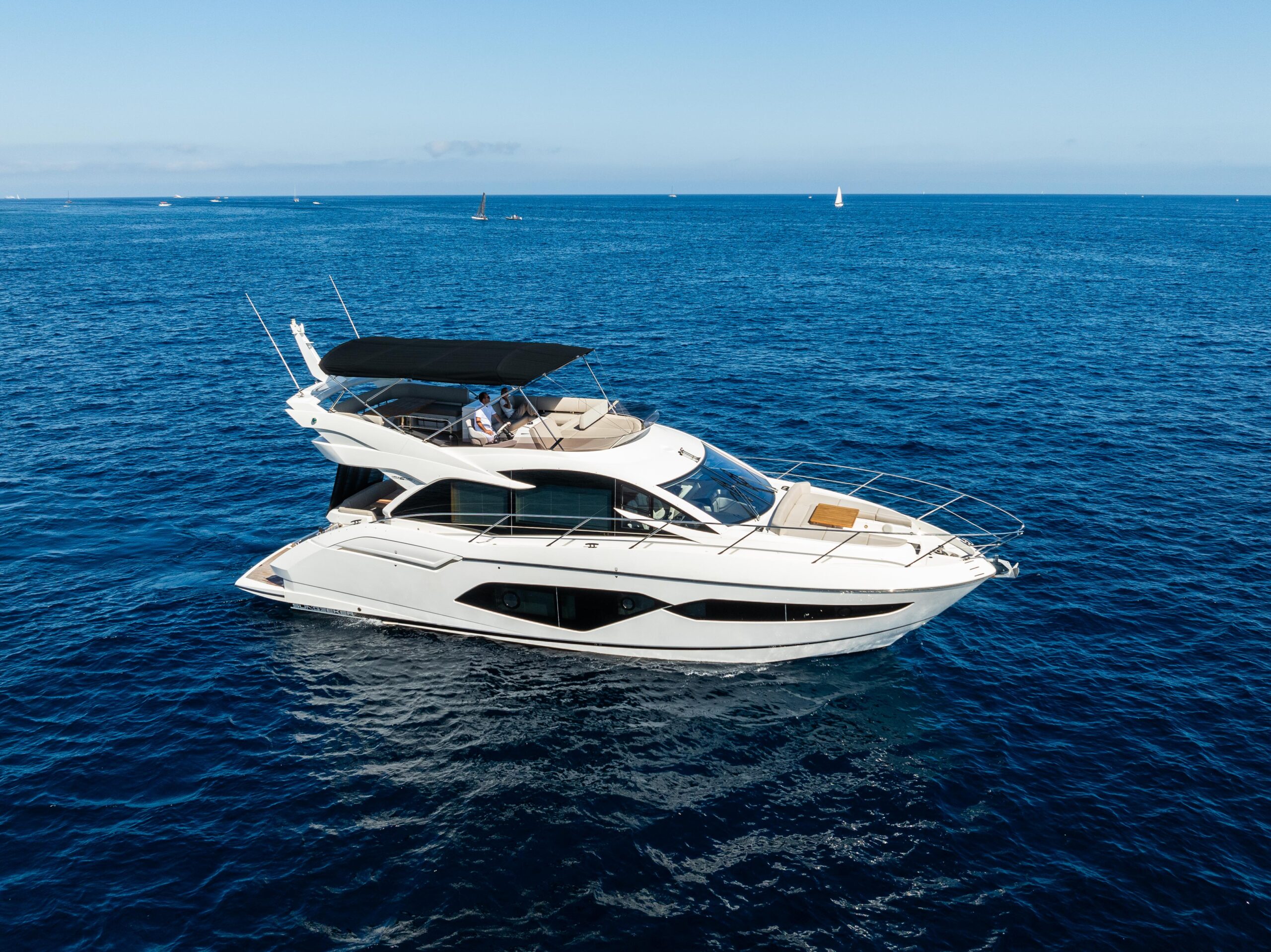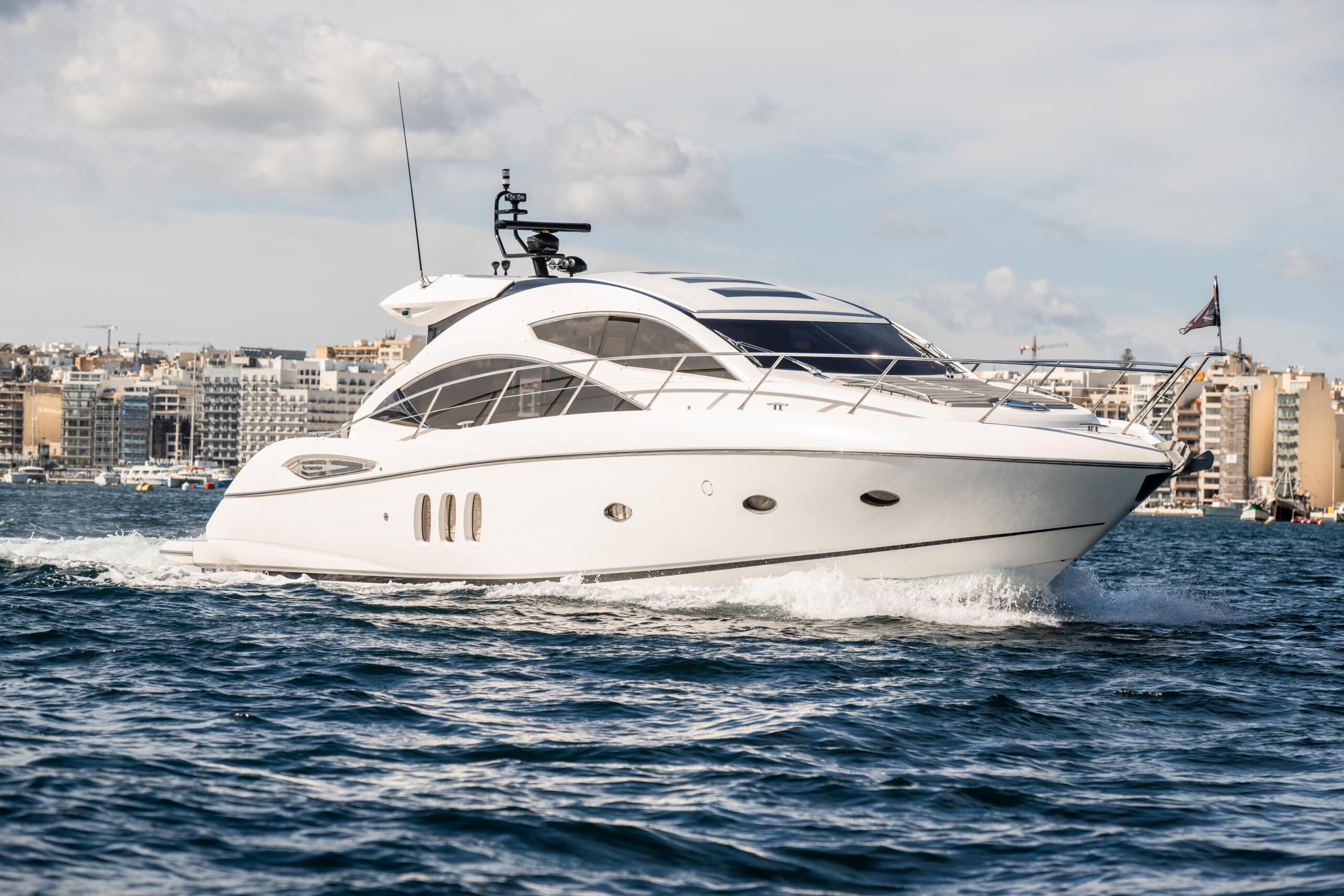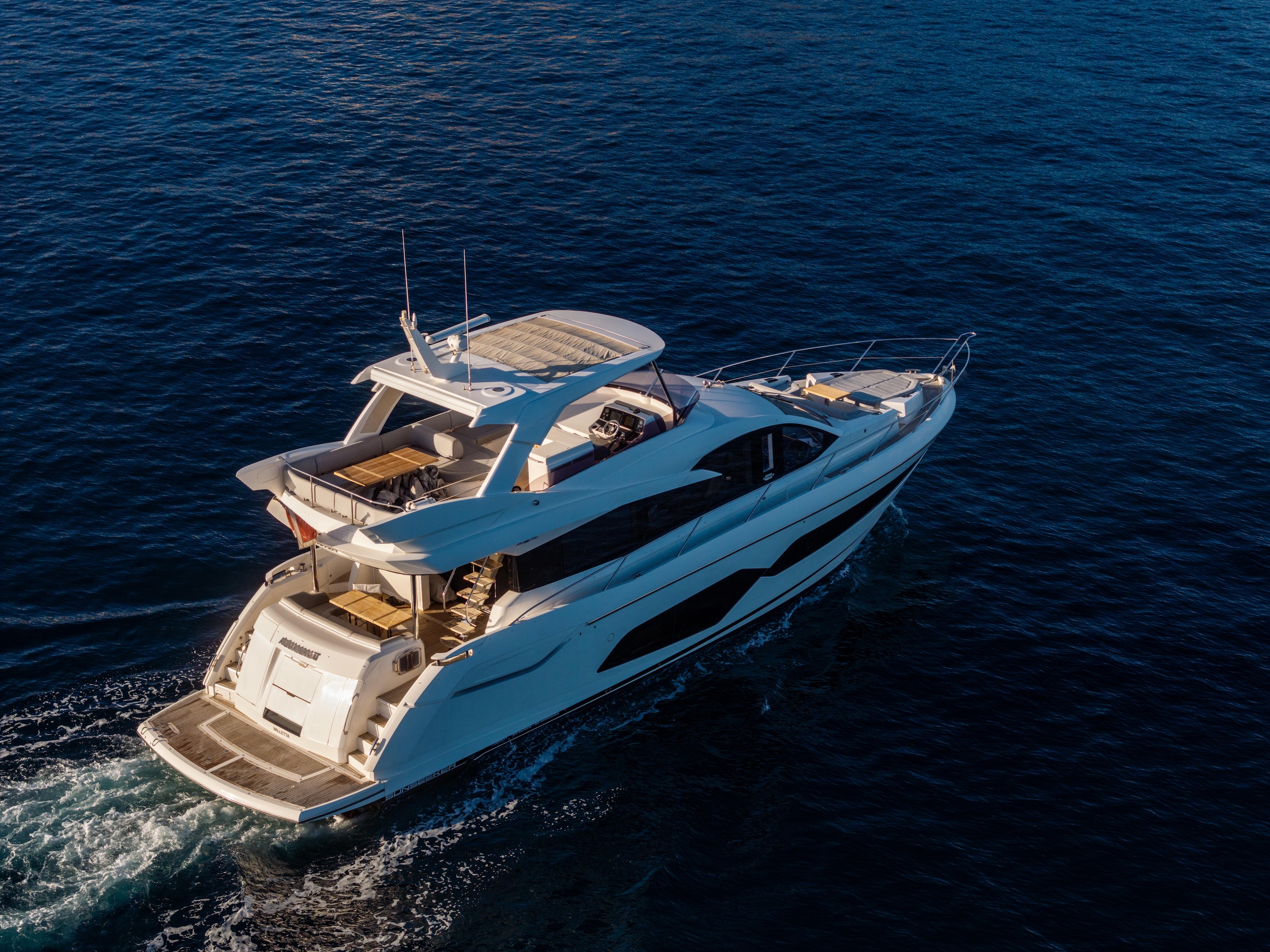
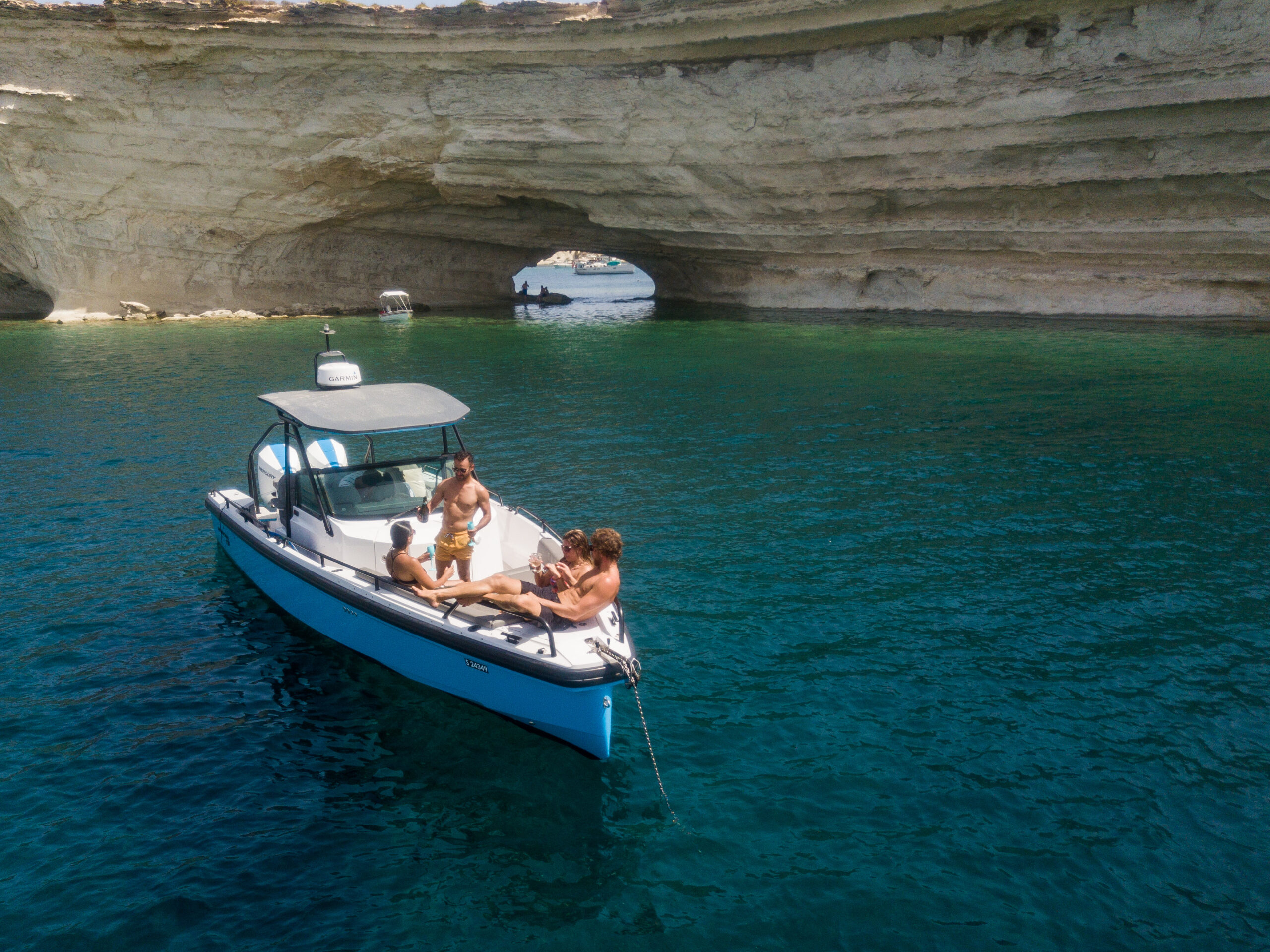
Ten hidden gems Malta keeps for the people who arrive by water, from the Ħofriet coves near Marsaskala to the Selmun coast and Filfla.
Malta has a busy coastline above water and a much quieter one below the cliff line. The places most travellers photograph are the obvious ones, the Blue Lagoon at Comino, the bastions of Valletta, the salt pans on the Gozo road. The hidden gems Malta saves for the people who arrive by yacht sit just outside that frame, in narrow inlets, fjord-like creeks and rocky shelves where a road would be impossible to build.
We run charters out of Marsamxett and Grand Harbour every week of the season, and the question we hear most often is not about price or yacht size. It is whether there are still bays here that feel private. The honest answer is yes, plenty of them. You just need a captain who knows the water and a boat that can slip into shallow rocky ground without scraping its keel. This guide walks through ten of those spots, from the Ħofriet coves near Marsaskala to the Selmun coast and the Filfla lookout, with notes on what fits where.
- Which of these gems are road-accessible and which are yacht-only?
- St Peter's Pool, the Inland Sea at Dwejra and the salt pans north of Marsalforn can be reached on foot, but the boat-side anchor is a different experience. The Ħofriet coves, Mġarr ix-Xini's outer mouth, the Cathedral cave south of Marsaskala, Filfla and Slug's Bay are effectively yacht-only.
- When is the best season to find them quiet?
- Late May, early June, and the second half of September. The water is warm, the meltemi has not set in, and the day boats from Sliema have not yet filled the popular anchorages.
- How many of these can fit in a one-day yacht route?
- Four to five is realistic on a single day from Grand Harbour or Marsamxett. A full ten-spot route needs an overnight charter or two separate days, one focused on Malta's east and south, one on Gozo and Comino.
1. Il-Ħofriet coves near Marsaskala
Il-Ħofriet sits between Marsaskala and St Thomas Bay on Malta's quieter southeast coast. The name simply means the holes, and that is exactly what the shoreline does. It opens into a series of narrow rocky inlets where the limestone has collapsed inward and left clear, deep pockets of water surrounded by low cliffs. From the road you would walk past it without noticing. From the water it is one of the most photogenic stops on the island.
The appeal is the colour and the geometry. The water inside the coves shifts from indigo to pale glass green depending on the angle of the sun, and the rock walls frame the boat almost like a pool surround. You can swim straight off the swim platform, snorkel along the wall for octopus and saddled bream, or paddle a SUP into the smaller pockets where a yacht cannot fit.
What fits here is a sport boat or a forty to fifty foot motor yacht with a tender. Anything much larger has to anchor outside the coves and shuttle guests in. Captains who run this coast often time the visit for late morning, before the wind shifts and pushes chop into the inlets. Our luxury yacht charter Malta routes usually use Il-Ħofriet as a quiet first swim of the day.
2. Wied il-Mielaħ window, Gozo
Most travellers know about the Azure Window because it collapsed in 2017, and most assume that was the end of Gozo's natural arches. It was not. Wied il-Mielaħ on the north coast of Gozo is a less famous but still standing limestone window, set into a cliff that drops cleanly into deep water. The land approach is a long walk down a valley. The yacht approach is a slow drift into the arch with the engine just ticking over.
Why it stays hidden is geography. The window faces an exposed stretch of the Gozo coast that catches northwesterly swell, so it is only safely accessible on calm days. That filters out half the season's traffic. When conditions line up, the captain can position the bow under the arch itself for a few minutes, which gives photographs that genuinely look unreal.
This stop suits a sport yacht or a smaller motor yacht with a captain who knows the swell pattern. Larger yachts hold offshore and send guests in by tender for a closer look. Pair it with a Gozo cruise and a lunch stop further along the coast for an easy half day.
3. Mġarr ix-Xini fjord
Mġarr ix-Xini is the closest thing Malta has to a fjord. It is a long, narrow inlet on the south coast of Gozo, originally a galley harbour for the Knights and now one of the most cinematic anchorages in the central Mediterranean. Brad Pitt and Angelina Jolie filmed here in 2014 and the small kiosk at the head of the creek still trades on it, but most yacht guests have it largely to themselves on a midweek morning.
The pleasure here is stillness. Steep walls of yellow limestone rise on both sides, the water inside the creek is glass calm even when the open sea is moving, and sound carries strangely. You can hear conversations on the cliff path and the click of fishing reels from the small jetty. Anchoring is on a single line into the creek, sometimes with a stern line ashore, so it pays to arrive before the small fleet of day boats appears around midday.
Almost any yacht size fits the outer mouth of Mġarr ix-Xini. Inside the creek, anything over sixty feet starts to feel large, so a forty five to fifty five foot motor yacht is the sweet spot. This is one of the spots we cover in our places to visit Malta by yacht round up if you want to plan a longer route.
Captains do not find these spots from a chart, they find them from years of running the same coast in different wind. The Ħofriet are a perfect example. On paper they look ordinary, in person on the right morning they are the highlight of the day.
4. The salt pans coast north of Marsalforn, Gozo
Most photographs of the Gozo salt pans are taken from the road, looking down at the chequerboard of shallow basins carved into the rock. From a yacht the same coastline looks completely different. You see the pans as a low strip on the cliff edge, then a long, lightly populated shoreline of small inlets and pebble beaches running west toward Wied il-Għasri. It is a part of Gozo most visitors never look at sideways.
Why it is hidden is simply that the road traffic stops at the pans. Beyond them the coast becomes a walking-only stretch, with no parking and no facilities, which means that on the water side it stays quiet even in August. The anchorages here are small, but the water is exceptionally clear, and the late afternoon light on the pale rock is one of the best photographic moments in Maltese waters.
A motor yacht of any size can run this coast, but the smaller anchorages favour boats up to about sixty feet. Captains often link the salt pans coast with a swim stop at Wied il-Għasri, a slot canyon so narrow that only tenders can enter. Combined, it is a slow and deeply scenic two-hour leg of a Gozo day.
5. Crystal Lagoon, Comino, before the day boats
Crystal Lagoon is not a secret. It sits on the western side of Comino, a few minutes around the corner from the Blue Lagoon, and on a busy summer afternoon it is full of charter boats. The trick is the timing. Arrive before nine in the morning or after five in the evening and the same lagoon is almost empty, with the same impossible turquoise water and the same sea caves around it.
What makes it a hidden gem in practice is how few visitors stay long enough to see it quiet. The Comino ferry crowd disembarks at the Blue Lagoon and rarely walks the path across the island. By yacht, repositioning between the two lagoons is a five-minute job. Captains who know the rhythm of the day will plan the Crystal Lagoon stop early, then drift to Cominotto for lunch as the bigger boats arrive.
Almost any yacht type fits Crystal Lagoon, but the prettiest version is a sport boat or sixty foot motor yacht anchored close to the cave entrances. Tenders and SUPs are essential here, because the most beautiful inner sections are too shallow for a yacht to enter. If you want to see the Blue Lagoon and Crystal Lagoon properly, this is the way to do it.
6. Cathedral cave south of Marsaskala
The southeast coast of Malta hides a sea cave that locals simply call the Cathedral. It is a tall vaulted chamber carved into the cliff a few minutes south of Marsaskala, with an entrance just wide enough for a tender. Inside, the ceiling rises high enough that voices echo properly, and a shaft of sunlight cuts through a small opening in the roof during the middle of the day.
It is hidden because there is no land path to it. The cliff above is rough garrigue, the access is from the water only, and even most local fishermen pass it without stopping because there is nothing to fish for inside. For a yacht guest with a captain who knows the spot, it is a five minute detour that almost no one else does.
The Cathedral works best from a tender or from a smaller sport yacht. The larger motor yachts hold offshore and send guests in for a quick swim under the skylight. Bring goggles, the bottom inside the cave is sand and pebbles and the water is unusually clear thanks to the constant exchange with the open sea.

7. The Inland Sea at Dwejra
The Inland Sea at Dwejra is one of the strangest pieces of geography in the Mediterranean. It is a small inland lagoon connected to the open sea by a low rock tunnel, just wide enough for the small wooden luzzu boats that the local fishermen run. From the land side, a road brings tourists down to the lagoon edge. From the yacht side, you anchor outside Dwejra and a tender or a luzzu can take guests through the tunnel itself.
Why the yacht angle matters is the approach. From the open sea you cruise alongside the towering cliffs of Dwejra, past the spot where the Azure Window once stood, and into a deep blue stretch of water that is one of the best dive sites in Malta. The contrast between the open exposure outside and the still pool inside is what makes the visit memorable.
Yachts of any size can anchor outside Dwejra in the right wind. The tunnel itself is for tenders and luzzus only. Many of our captains pair the Inland Sea with a swim at Fungus Rock, the small islet at the corner of the bay, and a slow drift back along the salt pans coast described above.
8. St Peter's Pool, the boat-side anchor
St Peter's Pool is famous on land, a natural rock pool at the edge of Delimara point with diving ledges that locals have used for generations. By road it is now a busy summer destination with parking pressure and queues for the cliff jump. By yacht it is a different place. You anchor in the open bay just outside the pool, swim in through the entrance, and have the inner basin largely to yourself in the early morning.
The boat-side experience is calmer because the volume of cliff visitors does not translate to in-water crowding. Most land guests stay near the diving ledges. You can SUP around the pool's edge, snorkel the wall for sea bream and the occasional grouper, and use the yacht as a private base just outside the entrance. It is one of the easier ways to combine a famous spot with the privacy of a charter day.
Anything from a forty foot motor yacht to a seventy foot sport yacht works well here. Larger yachts simply anchor a little further out and use the tender. The whole stop pairs naturally with a lunch run into Marsaxlokk, where a book a yacht in Malta day often ends with grilled fish at one of the harbour restaurants.
Timing is more important than the spot. The same anchorage at nine in the morning and at one in the afternoon are not the same place. Half of the job is just being there at the right hour.
9. Filfla island lookout
Filfla is the small uninhabited islet off Malta's south coast, visible from the cliffs at Dingli but rarely approached. Landing on the island is not allowed, it is a protected nature reserve, but the swim and lookout anchorage in the lee of the rock is one of the most atmospheric stops in the Maltese fleet. The island has a long history including use as bombing target practice in the twentieth century, and the silence around it now feels deliberate.
What makes the Filfla anchor a hidden gem is distance. It sits about five kilometres off the coast, far enough that the day boats from Sliema do not always include it on their route. From a yacht with a comfortable cruising speed, the trip is short and the reward is a swim in deep, exceptionally clear water with the cliffs of Malta as a horizon backdrop. On clear days you see the limestone coast of Dingli light up at the same time the sun starts to drop.
The Filfla stop favours larger motor yachts and well found sailing yachts that can sit comfortably in a swell. It is not a stop for a small day boat in any wind, and captains will skip it on the wrong forecast. When it works, it is one of the most peaceful hours of the season.
10. Slug's Bay and the Selmun coast
Slug's Bay is a tiny pocket of sand at the foot of the cliffs near Selmun, on Malta's north coast. The walk down from the road is steep and slightly hidden, which keeps land traffic light, but the bay itself is small enough that on busy days it can fill up. By yacht the experience is the opposite. You anchor offshore, look at a strip of sand framed by tall sandstone walls, and the bay rarely feels crowded from the water.
The Selmun coast around it is the real reason to come. North of Slug's Bay the cliffs run toward Mistra and Saint Paul's Islands in a long, lightly visited stretch with several small swim coves and a couple of caves cut into the rock. Most charter boats heading to Comino simply pass this stretch on the way north. Stopping properly turns it into the quietest hour of the day.
A motor yacht of forty five to seventy feet is the right tool for this coast. The anchorages are small but accessible, and the swell stays low except in true northerly weather. Pair Slug's Bay with a slow run past Saint Paul's Islands and a lunch in the lee of Comino for a long, calm day with almost no other charter traffic in sight. Our experiences section has a few of these routes mapped out in more detail.
Quiet bays stay quiet because people respect them. We brief every guest on anchor noise, music levels and rubbish before we leave the marina. It is the only reason these spots still feel the way they do.
How to build a hidden gems day
- Pick a coast first. East and south Malta is one full day. Gozo and Comino is a different full day. Trying to combine both in one charter is the most common mistake.
- Start early. The first hour after eight in the morning is the difference between an empty Crystal Lagoon and a busy one, and the same logic applies to almost every spot on the list.
- Keep two backup anchorages on the route. Wind direction in Malta shifts quickly, and a captain with options will protect the day better than a captain locked into a single plan.
- Match yacht size to the smallest stop you want to include. A ninety foot superyacht is a beautiful platform but it cannot enter the Ħofriet inlets or the Cathedral cave entrance.
- Bring snorkelling gear, a SUP and a quiet pair of fins. The best moments at most of these spots happen in the water, not on the deck, and the right [water toys](/water-toys) make a real difference.
- Are these spots safe for children?
- Most are. Il-Ħofriet, Crystal Lagoon, the Inland Sea at Dwejra and St Peter's Pool all suit families with younger children. The Cathedral cave and Filfla are better for stronger swimmers.
- Do we need a permit to enter Mġarr ix-Xini or Filfla?
- Mġarr ix-Xini is open to private yachts, with simple anchorage etiquette. Filfla cannot be landed on under any circumstance, but the surrounding water is open to swimming and anchoring outside the protected zone.
- Can a sailing yacht do the same route as a motor yacht?
- Yes, with adjustments. Sailing yachts handle the open passages between Malta, Gozo and Comino very well, but the smaller inlets often work better with a tender. A good captain will plan accordingly.
- What is the best base port for a hidden gems day?
- Marsamxett or Grand Harbour for a Malta-focused day, and Mġarr in Gozo for a Gozo and Comino-focused day. Either way, the day boats start later from Sliema, so an early departure pays off.
Why these gems still feel hidden
Malta is small. On paper, every coastline here is reachable. In practice, geography, road access and the rhythm of the tourist day separate the spots that get photographed from the spots that stay quiet. The Ħofriet, the Cathedral cave, the inner mouth of Mġarr ix-Xini and the Selmun coast are not secrets in the dramatic sense. They are simply outside the route that a typical day boat or land tour follows. A yacht puts you back inside that route.
What we tell guests on the first morning of a charter is that the goal is not to chase ten spots in a day. It is to find the two or three that match the weather, the group, and the mood, and then sit in them properly. Quiet bays only stay quiet if the people visiting them treat them carefully, and the best version of a hidden gems Malta day is one where the boat is the only one in the cove for an hour.
If you want to plan a route, our team can put together a full itinerary built around the right spots for your dates and group size. Captains in our fleet have run these waters for years, and the difference between a charter that hits four hidden gems and one that hits the same three obvious anchorages as everyone else usually comes down to local knowledge.
Captains who know the bays the day boats miss.
Plan a hidden gems route